 HESPER
HESPER
HESPER
Choosing the right Ceramic Rubber Hose can influence uptime, maintenance costs, and workplace reliability. For global buyers, the decision involves more than ceramic lining and rubber cover quality. Each hose must match the conveyed material, operating temperature, pressure, bending radius, and connection method. Details matter.
This guide examines leading Ceramic Rubber Hose types for demanding applications, including mining, cement production, steel processing, power generation, and bulk material handling. It considers alumina tile patterns, ceramic bead designs, wear-resistant compounds, flexible sections, and reinforced constructions. These differences affect service life under impact and abrasion. A hose that performs well with dry sand may fail quickly with sharp aggregate or hot slurry.
Practical selection also requires evidence. Buyers should review technical datasheets, batch traceability, test records, and supplier experience with similar installations. Ask about lining thickness, adhesion testing, pressure ratings, and replacement support. Certifications can help, but they should not replace engineering judgment. Site conditions often expose weaknesses that laboratory data cannot show.
No single hose suits every market. That is the difficult part. Shipping distance, local fittings, storage conditions, and after-sales communication also matter. Some recommendations may need adjustment after field inspection. This article offers a structured comparison for informed purchasing in 2026, while recognizing that performance depends on correct installation, realistic specifications, and continuous monitoring. Small cracks, exposed reinforcement, or unusual vibration should never be ignored. Reliable decisions begin with honest evaluation, not attractive product claims.
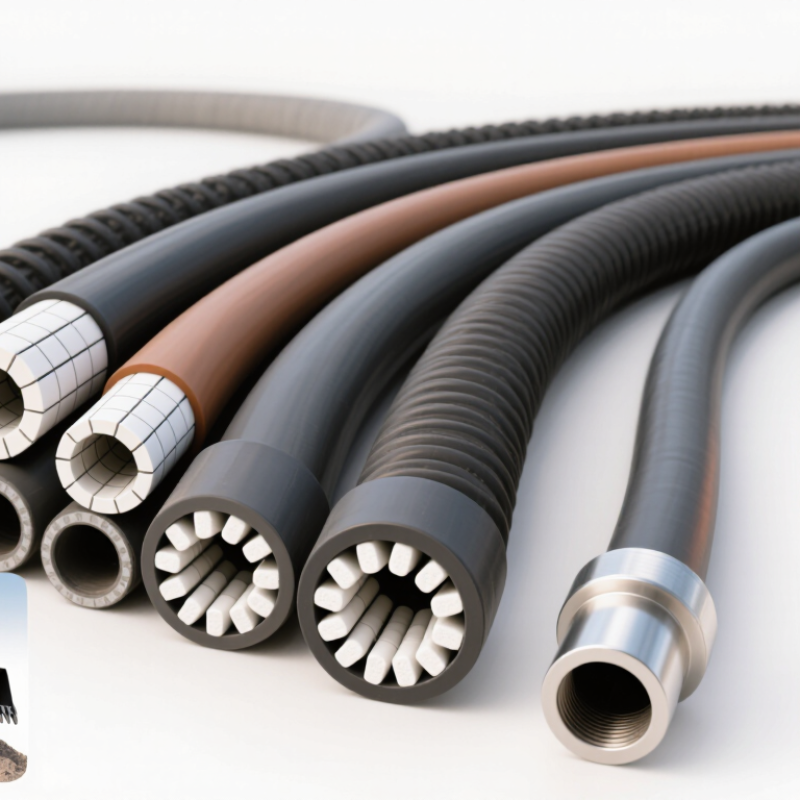
Ceramic rubber hoses combine a flexible rubber body with a wear-resistant ceramic lining. The lining contains small ceramic tiles or embedded ceramic sections. These parts protect the hose from abrasive materials, including sand, slurry, gravel, and mineral particles. Rubber provides flexibility and helps absorb vibration. This combination supports demanding transfer work. It is not a universal solution. Every application needs careful checking.
Key performance begins with abrasion resistance, but other factors matter too. Pressure ratings must match both operating and surge conditions. Temperature exposure can weaken rubber and reduce service life. Flexibility depends on hose structure, wall thickness, and minimum bend radius. A hose forced into a tight curve may crack internally. That damage can remain hidden for weeks. Regular inspection helps detect bulging, stiffness, leaks, or loose fittings. Test it under controlled conditions.
Application details often change the correct hose choice. Particle size, material hardness, flow speed, and moisture levels affect lining wear. Chemical compatibility also deserves attention. Some fluids may swell the rubber while leaving the ceramic untouched. Installation errors remain common. Poor alignment creates stress near couplings and bends. Field inspections often reveal support gaps beneath long hose runs. That finding is easy to overlook. Buyers should request documented pressure tests, material data, and clear service limits before approval. Performance claims without test conditions need careful reflection.
| Hose Type | Basic Construction | Typical Inner Diameter Range | Typical Working Temperature | Typical Working Pressure | Main Performance Features | Suitable Materials | Common Applications | Key Selection Considerations |
|---|---|---|---|---|---|---|---|---|
| Alumina Ceramic-Lined Rubber Hose | Flexible rubber tube with bonded or mechanically retained alumina ceramic tiles, cylinders, or segments in the flow path. | 25–600 mm | Approximately -40 to 120°C for the rubber cover; the ceramic lining withstands substantially higher localized material temperatures. | Commonly 0.6–2.5 MPa, depending on diameter, reinforcement, and connection design. | High resistance to sliding abrasion, impact protection, flexible routing, and comparatively low weight versus rigid ceramic pipe. | Dry or wet abrasive solids, including mineral particles, sand, ash, clinker, and aggregate. | Mining slurry lines, mineral processing, cement plants, power stations, aggregate handling, and pneumatic conveying. | Choose tile geometry and rubber hardness according to particle size, impact angle, flow velocity, and bend radius. |
| Alumina Ceramic Cylinder-Lined Hose | Rubber hose reinforced with closely fitted ceramic cylinders or rings that provide a continuous abrasion-resistant internal surface. | 25–300 mm | Approximately -40 to 120°C for the elastomeric body. | Commonly 0.6–2.0 MPa. | Very good wear resistance in sliding-flow service, smooth internal passage, and improved resistance to localized erosion. | Fine to medium abrasive powders, slurries, fly ash, silica-containing materials, and mineral concentrates. | Powder transfer, slurry transport, pneumatic conveying, filtration systems, and material discharge lines. | Best suited to relatively smooth flow paths; confirm compatibility with sharp, oversized, or high-impact particles. |
| Impact-Resistant Ceramic Rubber Hose | Heavy-duty rubber hose containing thick ceramic tiles or molded ceramic buttons supported by an impact-absorbing rubber layer. | 50–500 mm | Approximately -40 to 100°C for most standard rubber constructions. | Commonly 0.6–2.0 MPa. | Designed for combined impact and abrasion; flexible enough for equipment movement and vibration isolation. | Large rocks, ore, slag, gravel, clinker, and other coarse bulk solids. | Transfer chutes, crusher discharge, screen outlets, loading points, and mining equipment connections. | Use thicker ceramic elements and stronger reinforcement where drop height, particle size, or impact energy is high. |
| High-Temperature Ceramic Rubber Hose | Heat-resistant rubber cover and tube combined with ceramic lining; may include heat-resistant fabric or metal reinforcement. | 25–400 mm | Typically up to 150°C continuous service for selected elastomer constructions; short-term limits may be higher when specified by the manufacturer. | Commonly 0.5–1.5 MPa at elevated temperature. | Combines thermal resistance, abrasion protection, flexibility, and vibration absorption. | Hot ash, clinker, cement dust, hot mineral powders, and moderately hot abrasive slurry. | Cement production, steel handling, foundry systems, incineration plants, and hot-material transfer lines. | Temperature ratings depend mainly on the rubber compound, exposure time, pressure, and cooling conditions; verify the complete hose assembly rating. |
| Acid- and Chemical-Resistant Ceramic Hose | Ceramic-lined hose using a chemically resistant rubber tube and cover, commonly based on suitable synthetic elastomers. | 25–300 mm | Approximately -30 to 100°C, depending on the elastomer and chemical service. | Commonly 0.5–1.6 MPa. | Good resistance to abrasive chemicals, selected acids, and corrosive slurries while maintaining flexibility. | Dilute mineral slurries, fertilizer materials, chemical powders, process water containing solids, and selected corrosive media. | Chemical processing, fertilizer production, mineral treatment, wastewater systems, and slurry circulation. | Chemical compatibility must be checked against concentration, temperature, exposure time, and permeation requirements; ceramic alone does not make the hose chemically universal. |
| Food- and Hygienic-Grade Ceramic Hose | Smooth-bore hose with ceramic wear elements and an elastomer selected for controlled-contact applications, subject to applicable regulations. | 25–150 mm | Typically -30 to 100°C, depending on the approved hose compound and cleaning cycle. | Commonly 0.5–1.0 MPa. | Improved abrasion resistance for dry powders while supporting cleanability and flexible installation. | Non-oily food powders, mineral additives, salt, sugar-like granular products, and other approved dry bulk materials. | Food ingredient transfer, pharmaceutical excipient handling, powder processing, and hygienic conveying systems. | Confirm food-contact approvals, clean-in-place requirements, surface finish, residual product retention, and allowable cleaning chemicals. |
| Static-Dissipative Ceramic Rubber Hose | Ceramic-lined rubber hose incorporating conductive or static-dissipative rubber layers and a means of electrical continuity. | 25–300 mm | Approximately -30 to 100°C for common industrial constructions. | Commonly 0.5–1.6 MPa. | Controls electrostatic charge while providing abrasion resistance and flexible routing in powder-handling systems. | Dry powders, combustible dusts, mineral concentrates, carbon materials, and abrasive granules. | Powder loading, pneumatic conveying, chemical processing, battery-material handling, and dust-controlled installations. | Specify electrical resistance limits, grounding continuity, hazardous-area requirements, and inspection procedures before installation. |
| Flanged Ceramic Rubber Hose Assembly | Factory-assembled ceramic-lined hose fitted with fixed, floating, swivel, or customized flanges and sealing components. | 50–600 mm | Usually -40 to 120°C, subject to hose compound, gasket, and flange specifications. | Commonly 0.6–2.5 MPa. | Fast installation, reduced field fitting work, controlled alignment, and reliable connection for abrasive service. | Slurry, tailings, fly ash, sand, ore, cement raw meal, and other abrasive process materials. | Pipelines, pump outlets, elbows, expansion sections, equipment interfaces, and vibration-prone connections. | Match flange standard, pressure class, bolt pattern, gasket material, face-to-face length, and allowable angular movement. |
| Bend- and Elbow Ceramic Rubber Hose | Curved or formed hose section with ceramic lining arranged to protect high-wear zones at bends and changes in flow direction. | 50–500 mm | Approximately -40 to 120°C for standard industrial rubber constructions. | Commonly 0.6–2.0 MPa. | Reduces wear concentration at elbows, accommodates vibration and movement, and can lower the need for frequent replacement. | High-velocity slurry, sand, ore, ash, cement powder, and coarse abrasive solids. | Pipeline elbows, pump discharge lines, chute connections, dredging systems, and mineral conveying equipment. | Specify bend radius, flow direction, wear-zone thickness, installation orientation, and expected velocity to avoid premature localized wear. |
| Vacuum-Rated Ceramic Rubber Hose | Corrugated or reinforced rubber hose with ceramic wear lining and additional structural support to resist collapse under negative pressure. | 25–300 mm | Approximately -30 to 100°C, depending on reinforcement and vacuum conditions. | Positive-pressure rating is commonly 0.3–1.5 MPa; vacuum rating must be specified separately. | Combines abrasion resistance with flexibility and resistance to hose collapse in suction service. | Wet sand, mineral slurry, ash, sludge containing solids, and abrasive suction materials. | Dredging, vacuum conveying, slurry suction, tank unloading, and mobile material-handling systems. | Confirm full-vacuum level, unsupported length, minimum bend radius, external pressure, and reinforcement design. |
Note: The values shown are typical engineering ranges for general comparison, not universal guarantees. Actual performance depends on hose diameter, rubber compound, ceramic grade, lining thickness, reinforcement, connection design, media characteristics, temperature, pressure, velocity, and installation conditions. Always verify the final assembly rating and applicable regional standards before purchase.
Alumina tile-lined hoses suit mining discharge, coarse slurry, and repeated impact. Large tiles absorb hard particle strikes.
Bead-lined hoses provide smoother flow and better flexibility. They suit fine abrasive slurry, pumps, and frequent movement.
They handle severe abrasion and selected high-temperature duties. Their brittle lining requires careful handling and installation.
Check particle size, flow speed, pressure, temperature, chemicals, and operating angle. Rubber backing must resist the slurry chemistry.
Request pressure ratings, abrasion results, hardness data, rubber information, and batch traceability. Ask for samples.
Keep the stated bend radius. Align pipes carefully and support heavy sections separately. Tighten flange bolts evenly in a cross pattern.
Tight bends may stress the ceramic lining. Excessive bolt torque can crush the sealing area. Never force the hose to fix poor alignment.
Inspect elbows, flanges, and high-wear zones after the first weeks. Check vibration, leakage, and wall thickness during shutdowns.
Keep them capped, clean, supported, and away from direct sunlight. Avoid sharp bends and dragging across concrete.
Service life varies with slurry conditions and installation quality. A hose may last years in one line, then fail quickly elsewhere. Inspection records should guide replacement, not optimistic schedules.
This guide explains the essential features of Ceramic Rubber Hose, including its abrasion resistance, impact protection, flexibility, temperature tolerance, and ability to handle aggressive materials. It introduces the main types used in mining, cement, steel, power generation, chemical processing, and other industrial applications, such as lined conveying hoses, discharge hoses, suction hoses, and customized high-wear solutions. Each type is evaluated according to pressure, material characteristics, operating temperature, bend radius, and conveying conditions.
For global buyers, selecting the right Ceramic Rubber Hose requires careful attention to application requirements, material compatibility, dimensional accuracy, and dependable quality control. The guide also discusses relevant international standards, reinforcement materials, ceramic composition, rubber performance, and inspection requirements. Proper installation, suitable connection methods, routine inspection, cleaning, and timely replacement of worn components can significantly improve service life and reduce unexpected downtime. By considering the complete operating environment and long-term maintenance needs, buyers can choose a safe, efficient, and durable hose solution for international industrial use.
