
HESPER HESPER

What Is the Best Concrete Rubber Hose for 2026?

Time:2026-11-06 Author:Mason
0%

The best Concrete Rubber Hose for 2026 depends on the pump, mix, and conditions at the jobsite. A hose that suits a small placement may struggle under heavier flow or frequent movement. The right choice should match the pump’s pressure requirements, material compatibility, and recommended hose diameter. Not always.

Abrasion resistance matters when a hose drags across rough concrete or gravel. So do the inner tube, reinforcement, outer cover, and coupling design. Check the manufacturer’s working-pressure rating and minimum bend radius, rather than relying on appearance alone. A hose that kinks around a tight corner can interrupt placement and add strain to connections. Details count.

This guide examines the practical factors behind choosing a hose, including length, handling, durability, and maintenance needs. It also considers how clear product specifications help buyers compare options without guessing. A neat specification sheet cannot capture every awkward bend on a real site; that deserves a little skepticism. Treat performance claims as starting points, then verify them against the equipment manual and actual working conditions. The best option is not automatically the thickest or most expensive one. It is the hose that meets the application’s requirements and remains manageable through repeated use.
What Is the Best Concrete Rubber Hose for 2026?

What a Concrete Rubber Hose Is and How It Is Used

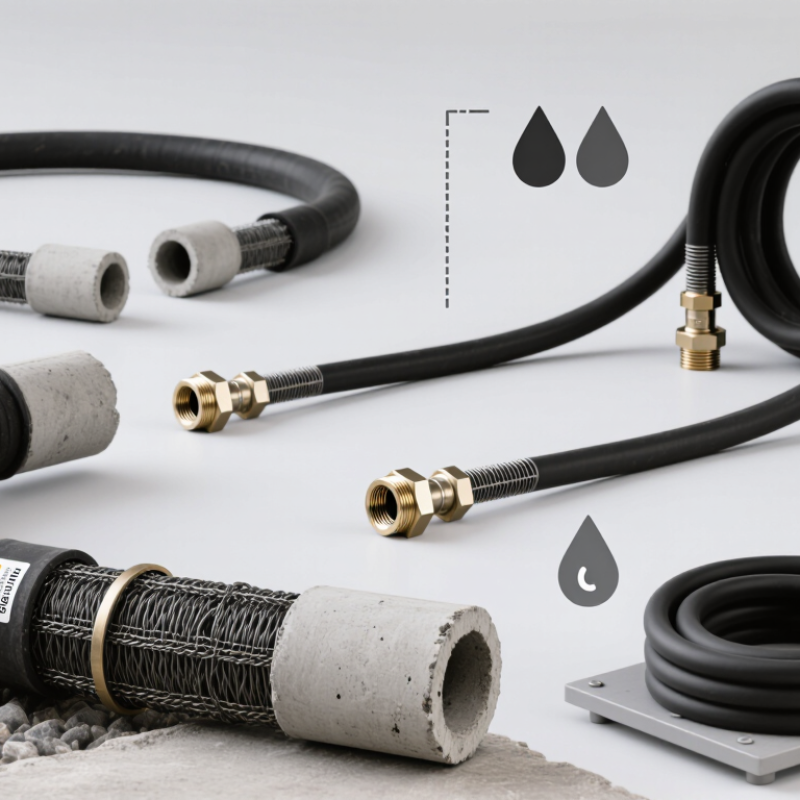
A concrete rubber hose is a flexible, reinforced line that carries fresh concrete from a pump or delivery pipe to the placement area. Its rubber inner layer helps resist abrasion from cement, sand, and aggregate. Reinforcement supports the hose under the pressure specified for the pumping system. Construction varies, so the hose rating and coupling type must match the equipment.

On a jobsite, rigid pipe handles much of the route, while a flexible hose helps direct concrete into forms, around rebar, or beneath a slab. Workers guide its outlet as the pump runs, keeping the end close to the pour. That can reduce splashing and help place the mix accurately. The hose is heavy, though, especially when full. It needs controlled handling, not casual dragging.

Before use, inspect the cover for deep cuts, bulges, exposed reinforcement, or leaking couplings. Check that connections are secure and that the hose is approved for the pump’s operating pressure. Concrete can harden inside quickly, so clean the line using the equipment maker’s procedure after placement. Small details matter. A worn hose may look usable from a distance; that is not a reliable test. Regular inspection takes time, and it can still miss hidden damage.

How Hose Construction Affects Concrete Pumping Performance

What Is the Best Concrete Rubber Hose for 2026?

Hose construction affects pumping performance long before concrete reaches the pour. The inner diameter must suit the mix, while reinforcement must handle the pump’s working pressure and pressure surges. ACI 304.2R-17, Guide to Placing Concrete by Pumping, recommends limiting nominal aggregate size to one-third of the line’s inside diameter for crushed stone, or two-fifths for well-rounded gravel. That guidance makes hose diameter a practical mix-design consideration, not just a purchasing detail.

Small details matter. A thick, abrasion-resistant liner can help withstand aggregate wear, but inspect bends and couplings closely; these areas can wear faster than straight sections. Wire reinforcement supports pressure resistance, yet the hose still needs a pressure rating suited to the pump and job conditions.

Tips: Check the hose’s rated working pressure, inside diameter, and compatibility with the concrete mix before each pour. Look for bulges, exposed reinforcement, damaged ends, and unusual soft spots. Replace suspect sections rather than relying on appearance alone.

One limitation: wear is not always visible from outside. A documented inspection routine helps, but it cannot predict every blockage or sudden pressure change.

Which Specifications Matter When Comparing Hoses

Concrete hose selection starts with the job: pumping through a fixed line differs from short placement runs around a slab. Check the stated working pressure against the pump’s operating range, not just the burst rating. That distinction matters. Also compare the hose’s inner diameter with the system’s line size; a mismatch can restrict flow or create awkward connections. Ask whether the end fittings are compatible and securely attached, since leakage often starts at a joint. Temperature ratings matter too, especially when hoses sit in direct sun or face cold conditions.

Reinforcement affects pressure handling, while the outer cover determines how well the hose resists abrasion, weather, and dragging across rough ground. A neat specification sheet cannot show how easily a heavy hose bends around a site corner. Check its minimum bend radius and weight, then consider how workers will move it. One specification can mislead. A lighter hose may be easier to handle, but it still needs ratings suited to the pump and material. Compare published test details, inspection guidance, and expected service conditions. If those details are missing, ask the supplier before ordering; guessing is a poor substitute for a clear rating.

How to Choose the Best Concrete Rubber Hose for 2026

Choosing the best concrete rubber hose for 2026 starts with the mix, pump, and working conditions—not just the advertised pressure rating. Match the hose’s inner diameter to the pump and aggregate size; a narrow bore can restrict flow, while an oversized one may be difficult to handle. Check the hose’s working-pressure rating against the pump’s requirements, allowing for pressure surges. Fit matters.

Look for an abrasion-resistant inner tube and reinforcement suited to the specified pressure. Confirm that the couplings fit your equipment and that the hose can bend around site obstacles without kinking. Length affects reach and handling, so avoid adding extra hose without a clear need. A heavier hose may be durable, but crews still need to move and position it safely.

Consider temperature limits, cleanup routines, and how often the hose will be used. After work, clear residue promptly and inspect the cover, ends, and couplings for cuts, bulges, or leaks. Check it again. Manufacturer specifications should guide selection, since construction and ratings vary. One detail is easy to overlook: a hose that fits the pump may still be awkward on a tight site. Evaluate the full setup before committing.

How to Inspect, Maintain, and Replace a Concrete Hose

What Is the Best Concrete Rubber Hose for 2026?

How to Inspect, Maintain, and Replace a Concrete Hose

The best hose is one suited to the pump, concrete mix, working pressure, and site conditions—not simply the thickest option. Check the hose’s rated pressure and coupling compatibility against the equipment specifications. Before each use, inspect the full length in good light. Look for cuts, bulges, crushed sections, exposed reinforcement, loose couplings, or concrete buildup. Small defects can hide under dust. Do not inspect or handle a pressurized hose.

Tips: After use, flush the hose according to the equipment instructions, then drain it and store it away from sharp edges and direct heat. Avoid tight bends and dragging it over rough ground. Even careful crews can miss early wear, so record inspections and flag changes for the next shift.

Replace a hose if its reinforcement is visible, its cover is separating, or it shows bulges, leaks, or damaged fittings. Retire it if its history is unknown or it no longer meets the required pressure rating. Do not rely on a quick patch for pressure-bearing damage. Match the replacement’s size, pressure rating, and couplings to the system, and follow the manufacturer’s guidance. A clean exterior is reassuring, but it does not prove the inside is sound.

FAQS

What is a concrete rubber hose used for?

It carries fresh concrete from a pump line to the placement area. Workers guide its outlet into forms, around rebar, or beneath a slab.

Why is the hose flexible?

Flexibility helps direct concrete around site obstacles. Keep the outlet close to the pour to reduce splashing. The hose can be heavy when full.

Which specifications should I check before choosing a hose?

Check working pressure, inside diameter, end fittings, temperature range, weight, and minimum bend radius. Match them to the pump and job conditions.

How does hose diameter affect concrete flow?

The inside diameter should suit both the pump line and concrete mix. Aggregate size matters too. A mismatch can restrict flow or contribute to blockages.

What should I inspect before a pour?

Look for deep cuts, bulges, exposed reinforcement, soft spots, leaking couplings, and damaged ends. Check that connections are secure and the pressure rating suits the pump.

Is a hose safe if its outside looks fine?

Not necessarily. Hidden wear may not show on the cover, and appearance alone is not a reliable test. Regular checks help, but they cannot reveal everything.

How should I clean a concrete hose after use?

Clean it promptly using the equipment maker’s procedure. Concrete can harden inside quickly. Don’t improvise the cleaning method.

What does reinforcement do in a concrete hose?

Reinforcement helps the hose handle pressure. The inner layer resists abrasion from cement, sand, and aggregate, while the outer cover faces weather and rough ground. A specification sheet still cannot show every site condition.

Conclusion

A Concrete Rubber Hose is a reinforced, flexible line designed to carry concrete from a pump to a placement area. Its performance depends on how its inner tube, reinforcement layers, and outer cover are built: suitable construction helps manage pressure, abrasion, bending, and the demanding flow of concrete. When comparing hoses, consider the required working pressure, inside diameter, length, flexibility, wear resistance, and compatibility with the pump and mix.

To choose the best option for 2026, match these specifications to the job’s pumping distance, material, and site conditions rather than relying on a single feature. Regularly inspect the hose for cracks, bulges, leaks, exposed reinforcement, or unusual wear, and keep connections secure and the hose clean after use. Follow appropriate handling and maintenance practices, and replace a hose when damage or deterioration could compromise safe, reliable concrete placement.

Mason

Mason

Mason is a seasoned marketing professional with a deep expertise in the company's offerings and a passion for driving brand awareness. With a strong background in digital marketing strategies, he has an innate ability to connect with diverse audiences and effectively communicate product benefits.......