
HESPER HESPER

China Top 10 Air Rubber Hose Manufacturers?

Time:2026-09-07 Author:Madeline
0%

China’s air hose industry serves construction, mining, automotive assembly, and factory maintenance worldwide. Air Rubber Hose products remain essential where pneumatic tools need steady pressure and flexible movement.

Grand View Research estimates the global industrial hose market at approximately USD 13 billion in 2023. Its report also forecasts continued growth through 2030, supported by manufacturing and infrastructure investment. MarketsandMarkets highlights construction, mining, and industrial automation as important demand sectors. These findings explain why Chinese manufacturers attract international buyers.

However, production volume alone cannot prove reliability. This guide reviews China’s top 10 Air Rubber Hose manufacturers through practical purchasing criteria. These include material quality, pressure ratings, reinforcement design, temperature resistance, factory certification, export experience, and after-sales support. ISO 2398, ISO 1402, and relevant EN standards provide useful reference points for compressed-air hose testing. Buyers should still verify certificates directly.

Look closely at the details. A hose may appear smooth, yet soften near a hot compressor outlet. A lightweight design may improve handling but reduce abrasion resistance. Some suppliers publish impressive specifications without showing independent test records. That deserves caution.

No ranking is perfect. Manufacturer capabilities change, and product quality can vary between batches. Therefore, this overview is a starting point, not a substitute for sample testing, application review, and documented technical communication. The strongest supplier is not always the largest. It is the one that matches pressure, temperature, flexibility, and service requirements consistently.
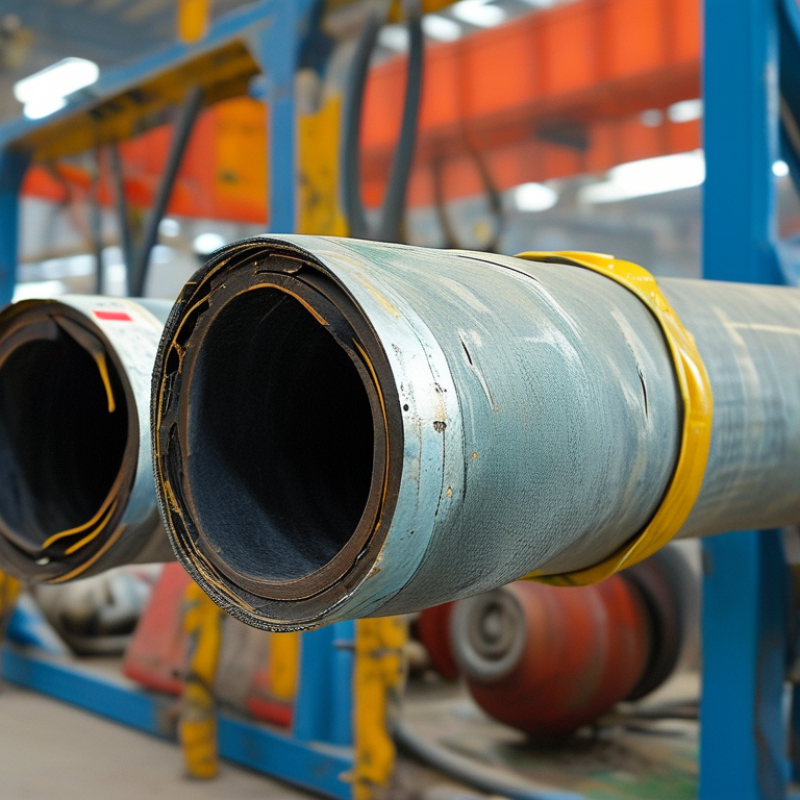
China Top 10 Air Rubber Hose Manufacturers?

What Are Air Rubber Hoses and Where Are They Used?

What Are Air Rubber Hoses and Where Are They Used?

Air rubber hoses carry compressed air from a compressor to tools, equipment, or pneumatic control systems. Their structure usually includes a rubber inner tube, textile reinforcement, and a protective outer cover. The tube resists pressure, while the cover handles abrasion, oil contact, sunlight, and workshop movement. Small details matter. A stiff hose can slow work.

According to Grand View Research’s Industrial Hose Market report, the global market was valued at approximately USD 14 billion in 2023. The report identifies manufacturing, construction, and mining as important application sectors. In these environments, air rubber hoses power impact wrenches, drills, spray systems, jackhammers, and automated production lines. They also serve tire workshops, shipyards, agricultural facilities, and maintenance stations. Compressed air is often available where electricity creates heat, sparks, or mobility problems.

MarketsandMarkets reports that pneumatic equipment demand is supported by factory automation and industrial maintenance. However, market figures vary between reports because product definitions differ. That is worth remembering. A hose selected for a clean indoor workshop may fail quickly beside gravel, welding heat, or petroleum residue. Users should check working pressure, temperature range, bend radius, coupling compatibility, and visible wear. ISO 4414 provides safety guidance for pneumatic systems, while local workplace rules may add requirements. Regular inspection is practical: look for blisters, cuts, exposed reinforcement, and leaking fittings before pressure rises.

How to Evaluate Air Rubber Hose Manufacturers in China

A top-ten list is only a starting point when evaluating air rubber hose manufacturers in China. Grand View Research valued the global industrial hose market at approximately USD 13.7 billion in 2023, showing strong demand but also intense competition. Buyers should verify factory capability, not ranking claims.

Request production records for rubber mixing, extrusion, reinforcement, and vulcanization. A reliable factory should provide batch numbers, compound specifications, and traceable test results. Check compliance with ISO 2398 for textile-reinforced compressed-air hoses, where applicable. Ask for working pressure, burst pressure, temperature range, and bend-radius data. The hose should remain flexible, without surface cracks, after repeated bending. Small details matter.

Visit the plant if the order is substantial. Watch how operators inspect pinholes and measure wall thickness. Independent testing is more convincing than a polished brochure. ASTM D380-based procedures can support hose performance checks, while third-party laboratories can verify pressure and aging results. The World Bank reports that China remains a major manufacturing base, but scale does not guarantee consistency. I have found that some suppliers provide excellent samples yet struggle with later batches. That uncomfortable gap deserves attention. Compare at least three factories, inspect recent production lots, and clarify replacement terms before signing. Be cautious with unusually low prices. They may reflect thinner walls, cheaper compounds, or weaker reinforcement.

China Top 10 Air Rubber Hose Manufacturers? How to Evaluate Air Rubber Hose Manufacturers in China

This chart presents a practical procurement evaluation framework rather than a ranking of individual companies. Product quality and safety should be verified through applicable standards such as ISO 18752, ISO 1436, and EN 853, while factory audits, testing records, production capacity, delivery performance, customization capability, and total cost should be assessed before selecting a supplier. The percentages represent recommended evaluation weights and total 100%.

China’s Top 10 Air Rubber Hose Manufacturers

China’s Top 10 Air Rubber Hose Manufacturers are often compared through quality, production capacity, and export reliability. A credible list should examine rubber formulation, reinforcement methods, and pressure-test records. Strong manufacturers usually offer hoses for workshops, compressors, construction equipment, and industrial air systems. Their products should remain flexible in cold conditions and resist cracking near fittings. Factory audits can reveal more than polished catalog images. Check mixing rooms, curing equipment, and batch traceability.

Tips: Ask for sample hoses, technical data sheets, and recent test reports. Confirm working pressure, burst pressure, temperature range, inner diameter, and fitting standards. A clear warranty policy matters too. Small details matter.

Purchasers should compare response speed, customization ability, packaging quality, and after-sales support. Some suppliers may provide excellent samples but struggle with large, consistent orders. That difference is easy to miss. Independent inspections and trial shipments reduce this risk. A ranking of the top ten should not rely only on online visibility or low quotations. Long-term performance depends on storage, installation, and daily use as well. Even a well-made hose can fail when sharply bent, dragged across rough concrete, or exposed to unsuitable heat. I would also review customer feedback carefully, because one impressive project cannot prove stable manufacturing. Pricing deserves attention, but it should not replace technical evidence.

Key Products, Certifications, and Manufacturing Capabilities

China’s top ten air rubber hose manufacturers are best compared through products, certifications, and production depth. A useful shortlist should include suppliers making compressed-air hoses, pneumatic tubing, coiled hoses, and heavy-duty rubber lines. Common constructions include oil-resistant inner tubes, textile reinforcement, and weather-resistant outer covers. Some factories also produce customized lengths, fittings, and color-coded hose assemblies.

Look for ISO 9001 quality systems, batch traceability, and documented pressure tests. CE-related documentation may apply when a hose assembly forms part of regulated equipment. RoHS compliance can matter for products supplied into specific markets. Reliable manufacturers should provide test data for working pressure, burst pressure, leakage, bending, abrasion, and temperature resistance. Ask for recent certificates, not only scanned copies from old projects.

Manufacturing capability reveals practical experience. Strong producers usually control rubber mixing, extrusion, reinforcement, vulcanization, cutting, and final inspection internally. Automated braiding can improve consistency, while sample testing should confirm performance at the stated pressure. Custom tooling is valuable for unusual diameters or fittings.

Yet factory size alone proves little. A large catalog may hide uneven quality between models. This deserves scrutiny. Request production samples, inspection records, and clear warranty terms before placing a large order. Performance can change when hoses face oil mist, sunlight, cold workshops, or repeated bending. A serious supplier explains those limits instead of promising everything.

How to Choose the Right Chinese Air Rubber Hose Supplier

Choosing the right Chinese air rubber hose supplier requires more than comparing prices. A reliable factory should explain working pressure, burst pressure, temperature range, inner diameter tolerance, and reinforcement structure. Ask for technical datasheets and recent test records. Clear answers matter.

Request samples before placing a large order. Check the hose by bending it around the planned installation radius. Look for surface cracks, uneven wall thickness, loose fabric, or a strong chemical smell. Test the sample with your actual fittings and compressor. Compatibility failures often appear after installation, not during inspection. This detail is easy to miss.

Supplier experience should include traceable materials, stable production equipment, and documented quality checks. Confirm how rubber compounds are stored and how batches are identified. Factory photos help, but an independent audit provides stronger evidence. Ask about minimum order quantities, lead times, packaging, replacement procedures, and export documents. Do not accept vague promises. Short answers can hide weak controls. A low quotation may reflect thinner walls, cheaper reinforcement, or incomplete testing. That is not always true, but it deserves questioning. I would also compare three samples under identical pressure conditions, because visual inspection alone can be misleading. Keep written records of every specification, including fitting size, color, length, and delivery tolerance.

FAQS

: What should I compare when selecting an air rubber hose manufacturer?

: Compare rubber formulation, reinforcement, pressure records, production capacity, and export reliability. Factory evidence matters.

Which technical details should the supplier provide?

Request working pressure, burst pressure, temperature range, inner diameter tolerance, and reinforcement structure. Do not accept vague figures.

Why should I request samples before ordering?

Samples reveal cracks, uneven walls, loose fabric, and unusual chemical smells. Test them with your fittings and compressor.

How can I check hose flexibility?

Bend the sample around the planned installation radius. Check whether it stays flexible without surface cracking.

Does a low quotation indicate poor quality?

Not always, but question thinner walls, cheaper reinforcement, or incomplete testing. Price alone proves very little.

What should a factory audit examine?

Inspect mixing rooms, curing equipment, material storage, batch identification, and documented quality checks. Photos are not enough.

How can I reduce large-order risks?

Compare three samples under identical pressure conditions. Use independent inspections and consider a trial shipment.

What installation details can cause hose failure?

Sharp bends, rough concrete, unsuitable heat, poor storage, and incompatible fittings can damage a good hose.

Which service details deserve attention?

Confirm minimum order quantities, lead times, packaging, replacement procedures, export documents, and warranty terms. Written records help.

Can one successful project prove stable manufacturing?

No. Review repeated customer feedback and batch consistency. I might still miss hidden production problems.

Conclusion

This guide explains what an Air Rubber Hose is, how its flexible rubber construction supports the transfer of compressed air, and where it is commonly used, including workshops, factories, construction sites, mining operations, and general pneumatic systems. It also presents a practical approach to evaluating Chinese manufacturers by reviewing material quality, pressure and temperature ratings, reinforcement structure, production consistency, testing procedures, customization services, delivery capacity, and after-sales support.

The overview compares ten leading types of Chinese suppliers according to their key products, manufacturing capabilities, quality systems, certifications, and ability to serve different industrial requirements. It concludes with a clear selection framework to help buyers identify the right supplier based on application, working environment, hose dimensions, performance expectations, budget, documentation, and long-term cooperation needs. By considering both technical specifications and supplier reliability, purchasers can make a more informed decision when sourcing Air Rubber Hose products from China.

Madeline

Madeline

Madeline is a dedicated marketing professional with a wealth of expertise in our company's core offerings. With a keen understanding of the industry, she brings a unique perspective to her role, consistently delivering high-quality content that highlights the superior aspects of our products. As......