
HESPER HESPER

Why Choose Cement Rubber Hose for Concrete Pumping?

Time:2026-10-02 Author:Charlotte
0%

Concrete pumping looks simple from a distance. Concrete enters one end, travels through a line, and reaches the formwork. In practice, every bend, vibration, pressure change, and aggregate particle matters. The Cement Rubber Hose becomes a critical link between pump performance and placement quality. It must handle heavy concrete mixtures without collapsing, splitting, or creating unnecessary flow resistance.

Concrete-pumping specialist John S. Mulligan explains, “A hose is part of the placing system, not an accessory.” This practical view matters on crowded construction sites. A reliable hose can absorb movement near the discharge point. It also helps workers position concrete more accurately around reinforcement, corners, and narrow openings. Its flexible rubber body supports smoother handling than rigid pipe in final placement areas.

Yet, Cement Rubber Hose is not a perfect solution for every condition. Incorrect diameter, excessive bending, poor coupling, or neglected cleaning can still cause blockages. That part deserves more attention. A strong hose cannot compensate for weak maintenance or unsuitable concrete design.

Field experience shows another detail. A hose may appear sound outside while its inner tube is already worn. Regular inspection, pressure awareness, and proper storage remain essential. When selected for the mix, pump pressure, distance, and working environment, Cement Rubber Hose offers a practical balance of flexibility, durability, and control. The real advantage is not merely strength. It is dependable placement when the job becomes difficult.
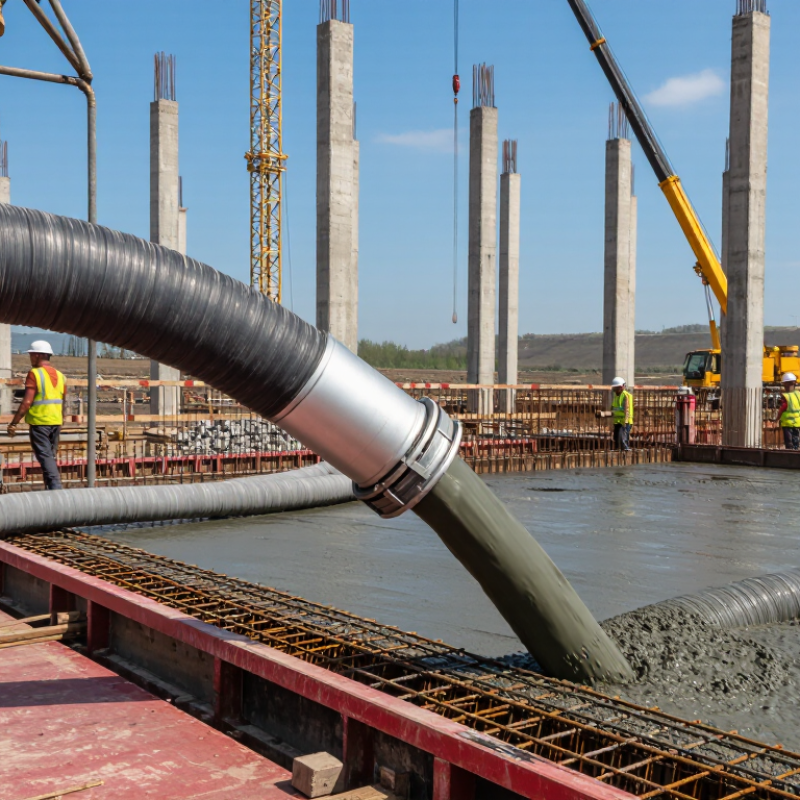
Why Choose Cement Rubber Hose for Concrete Pumping?

What Is a Cement Rubber Hose?

A cement rubber hose is a flexible, reinforced pipe used to transport wet concrete from a pump to the placing point. “Cement hose” is common site language, but the material carries concrete, not cement alone. Its inner tube uses abrasion-resistant rubber, while fabric or steel reinforcement supports pumping pressure. Steel couplings connect each section. The hose must match the pump’s pressure rating, delivery diameter, and concrete mix.

The Global Cement and Concrete Association reports that about 14 billion cubic metres of concrete are used worldwide each year. That scale makes reliable conveying equipment important. A properly selected hose helps reduce leakage, segregation, and sudden flow changes. However, rubber is not indestructible. Coarse aggregate gradually wears the inner wall, especially near bends and the end hose. I have seen operators inspect the outside carefully while missing hidden internal wear. That mistake can become costly.

The IEA estimates that cement production creates roughly 7% of global energy-related and process carbon dioxide emissions. Longer hose service life can support better material efficiency, although it cannot solve concrete’s wider environmental impact. Safety guidance in EN 12001 recommends controlling hose movement and checking components before operation. Inspect the coupling, gasket, reinforcement, and end fitting. Replace damaged parts. Do not rely only on appearance. A hose may look sound yet contain severe internal abrasion. This is where practical judgment still matters. Familiar equipment can invite careless assumptions.

How Cement Rubber Hoses Work in Concrete Pumping

A cement rubber hose is the flexible link between a concrete pump and the placement point.

It carries wet concrete through changing site conditions. The inner rubber tube resists abrasion from cement paste, sand, and coarse aggregate. Fabric or steel reinforcement supports the hose under pumping pressure. When the pump piston pushes forward, pressure travels through the concrete column. The hose expands slightly and absorbs part of that movement. Pressure changes quickly. This flexibility reduces vibration near the boom or delivery line.

At the nozzle, the operator controls the flow and directs concrete into forms, walls, or slabs. A suitable hose must match the pump’s working pressure and concrete mix.

If the mix contains sharp aggregate, poor lining quality can cause faster wear. A smooth inner surface helps maintain steady flow and reduces material buildup. The hose should also follow its recommended bending radius. Tight loops can restrict flow and damage reinforcement. On active sites, workers often check couplings for leaks before pumping begins.

After use, cleaning is essential. Fresh concrete can harden inside the hose within a short time. Flushing procedures should follow the equipment supplier’s safety instructions.

Operators should inspect bulges, cuts, exposed wires, and stiff sections regularly. No hose is perfect. Even a well-maintained hose can fail when overloaded or sharply bent. In my view, service records are often overlooked, yet they reveal wear patterns before a serious blockage occurs. Small inspection habits matter.

Key Benefits of Using Cement Rubber Hoses

Cement rubber hoses offer practical advantages during concrete pumping. Their flexible walls follow tight bends, helping crews position the discharge end around columns, walls, and congested reinforcement. This flexibility also reduces sudden movement at the outlet. A steadier hose can improve placement control and reduce splashing.

The Global Cement and Concrete Association estimates that around 14 billion cubic metres of concrete are used worldwide each year. At this scale, small handling losses can become expensive waste. A properly selected rubber hose helps maintain a continuous flow and limits leakage around connections. The U.S. Environmental Protection Agency reports that construction and demolition activities generate more than 600 million tons of debris annually in the United States. Hose durability therefore matters beyond equipment life; fewer premature replacements can reduce material consumption. Rubber also absorbs vibration better than rigid delivery pipes, which may improve operator comfort during extended pours. Less shock.

However, rubber hoses are not maintenance-free. A hose with a worn inner layer can fail without obvious external damage. Operators should inspect couplings, bends, and end sections before every pour. Concrete mix design matters too. Coarse aggregate, high pressure, and frequent bending accelerate internal wear. EN 12001 guidance emphasizes safe inspection and operation of concrete delivery equipment, but field discipline remains decisive. I would not treat a longer service claim as guaranteed. Actual life depends on pressure, aggregate hardness, cleaning practice, and storage conditions.

How to Choose the Right Cement Rubber Hose

Why Choose Cement Rubber Hose for Concrete Pumping?

How to Choose the Right Cement Rubber Hose

Choosing a cement rubber hose starts with the pump, not the price. Check the pump’s working pressure, surge pressure, and concrete delivery rate. The hose must exceed these requirements with a safe margin. A hose with the wrong pressure rating may fail suddenly. That is dangerous and expensive.

Match the inner diameter to the concrete mix and pump outlet. Coarse aggregate needs enough room to pass without frequent blockages. Measure the required length carefully, because extra hose adds weight and pressure loss. Check the minimum bend radius too. Sharp bends can damage the reinforcement layers. Look for a wear-resistant inner tube and strong fabric or wire reinforcement. Quality couplings matter equally. They should fit tightly and resist leakage during pumping.

Tips: Inspect the hose before every shift. Look for bulges, deep cuts, exposed reinforcement, and worn couplings. Do not drag it over sharp concrete edges. Keep records of pressure, usage time, and visible damage. These details help predict replacement needs, although they are not perfect. Field conditions can change quickly. A hose that looks acceptable may still have hidden internal wear. When selecting a product, request technical data, pressure-test records, and material information from a reliable supplier. Confirm that the hose suits your concrete mix, temperature, and pumping distance. Small mistakes here can create major delays.

Maintenance and Safety Requirements for Reliable Pumping

Why Choose Cement Rubber Hose for Concrete Pumping?

Maintenance and Safety Requirements for Reliable Pumping

A cement rubber hose can absorb vibration and tolerate repeated bending during concrete placement. Its flexible wall helps workers guide the discharge end around columns, slabs, and narrow access points. However, flexibility does not make the hose indestructible. Abrasion, heat, sharp bends, and trapped pressure can cause sudden failure.

Inspect the hose before every shift. Look for exposed reinforcement, bulges, deep cuts, crushed sections, and hardened concrete near the couplings. Check the gasket, clamps, and locking pins as well. A hose may appear usable while its inner tube is already thinning. That mistake is easy to make. Replace damaged parts instead of stretching their service life.

Confirm that the hose pressure rating matches the pump and concrete mix. Keep the line supported, but allow enough movement for normal pumping. Avoid tight loops and dragging the hose across rough ground. During operation, workers should wear eye protection, gloves, safety footwear, and suitable protective clothing. Nobody should stand directly in front of the outlet or beside an uncertain connection.

If the line blocks, stop the pump and isolate the system. Release pressure according to the equipment procedure before loosening any coupling. Never strike, bend, or open a pressurized hose. I have seen crews focus on production speed and overlook small leaks near the end fitting. That habit deserves correction. Record inspections, pressure events, and replacements, even when nothing fails. Reliable pumping depends on those ordinary details.

Why Choose Cement Rubber Hose for Concrete Pumping? - Maintenance and Safety Requirements for Reliable Pumping
Inspection or Operating Dimension Recommended Practice Typical Frequency or Trigger Acceptance Criteria Safety Importance Required Action if Non-Compliant
Working-pressure selection Select a hose with a rated working pressure that exceeds the maximum pressure specified for the concrete pump and the actual placement system. Use the manufacturer’s pressure rating; do not estimate capacity from hose appearance or wall thickness. Before installation, after pump replacement, and whenever the delivery arrangement changes. Hose rating is equal to or higher than the system requirement, with compatible couplings and end fittings. Prevents burst failure caused by overpressure. Remove the hose from service until the pressure rating and complete assembly have been verified.
Hose condition and cover Inspect the rubber cover for cuts, exposed reinforcement, abrasion, blistering, cracking, chemical attack, soft spots, and localized swelling. Before every shift and after moving the hose across sharp edges or rough surfaces. No exposed reinforcement, deep cuts, significant bulges, or damaged areas that can reach the reinforcement layers. Damaged reinforcement can lead to sudden rupture under pumping pressure. Tag and isolate the hose. Do not repair structural damage with tape, clamps, or external wrapping.
Internal blockage Keep the delivery line filled with a suitable primer or compatible lubrication slurry before concrete enters the hose. Avoid allowing concrete to stand and harden inside the line. During setup, interruptions, mix changes, and shutdowns. Concrete flows continuously without abnormal pressure rise, pulsation, or restricted discharge. Blockages can create dangerous pressure accumulation and hose whip. Stop pumping, isolate the pump, release pressure safely, and clear the blockage according to the equipment procedure. Never strike a pressurized hose.
Couplings and clamps Check coupling locks, gaskets, pins, clamps, bolts, and retaining devices. Use correctly matched components and ensure the coupling is fully seated. Before each use and whenever a connection is assembled or disconnected. No missing locking parts, damaged threads, leakage, visible separation, or movement at the joint. A failed connection can release pressurized concrete and cause hose movement. Depressurize the line and replace damaged seals, locks, or fittings before restarting.
Minimum bend radius Route the hose without sharp kinks, twisting, crushing, or forced bends. Maintain the minimum bend radius specified for the hose construction and diameter. During installation, repositioning, and daily inspection. The hose remains smoothly curved and is not flattened, twisted, or bent below its specified limit. Excessive bending accelerates reinforcement fatigue and restricts concrete flow. Re-route or replace the hose. Do not straighten a kinked hose while the line is pressurized.
External support and routing Support long or elevated hose sections so that the hose and couplings are not carrying unnecessary weight. Protect the hose from sharp edges, vehicle traffic, hot surfaces, and falling objects. At setup and after any change in site layout. The hose is stable, protected from mechanical damage, and free from unsupported loads at the coupling ends. Reduces fatigue, abrasion, tripping hazards, and coupling overload. Stop work and correct the routing or support arrangement before pumping continues.
Concrete compatibility Confirm that the hose lining is suitable for the concrete mix, aggregate size, admixtures, temperature, and expected pumping conditions. Highly abrasive mixes require appropriate wear resistance. Before using a new mix, admixture, aggregate size, or cleaning chemical. The hose construction and lining are approved for the materials and temperature used on site. Improves service life and reduces wear-related leakage or blockage. Obtain technical confirmation or select a compatible hose before use.
Pressure monitoring Monitor pump pressure and investigate unusual increases, pulsation, reduced output, or changes in the sound of the line. Keep personnel away from suspected blockage areas. Continuously during pumping and whenever flow becomes abnormal. Operating pressure remains within the pump and hose assembly limits, with stable material flow. Early detection helps prevent overpressure and uncontrolled hose movement. Stop the pump, isolate the system, and release pressure using the established safe procedure.
End-hose control Only trained personnel should control the discharge end. Keep workers clear of the hose’s potential movement path and never stand directly in front of an open, pressurized end. During every placement operation. The discharge area is controlled, communication is established, and non-essential personnel remain outside the exclusion zone. Limits struck-by injuries from hose whip and unexpected discharge. Stop pumping until the exclusion zone, communication method, and operator positions are corrected.
Cleaning after use Flush and clean the line promptly using the approved cleaning method. Prevent concrete from hardening inside the hose and fittings. After each pumping session and before extended storage. The bore is free from hardened concrete, and cleaning water or material is discharged in an approved location. Prevents blockage, excess pressure, internal wear, and cross-contamination. Do not return the hose to service until the bore and fittings have been safely cleared.
Inspection for internal wear Where practical, inspect the bore for deep grooves, exposed reinforcement, uneven wear, hardened deposits, and reduced internal diameter. At scheduled maintenance intervals and whenever flow resistance increases. No critical wear, exposed reinforcement, severe deposits, or significant restriction is present. Internal wear may reduce pressure capacity and increase blockage risk. Remove the hose from service if the lining or reinforcement is compromised.
Leakage and seepage Check for wet spots, cement paste leakage, pinhole leaks, and material escaping near couplings or through the cover. Before use and continuously during pumping. No leakage is visible from the hose body, coupling, gasket, or connection. Leakage can indicate structural damage or a failing seal under pressure. Stop pumping and depressurize the line before inspection, repair, or replacement.
Storage conditions Store the hose clean, dry, capped, and supported in a relaxed coil. Keep it away from direct sunlight, ozone-generating equipment, oils, solvents, sharp objects, and extreme heat. Whenever the hose is not in use. The hose is protected from ultraviolet exposure, chemicals, deformation, moisture, and mechanical damage. Proper storage slows rubber aging and preserves flexibility and pressure performance. Relocate the hose and inspect it for aging or deformation before the next use.
Temperature exposure Operate and store the hose within the temperature range specified for its rubber compound, reinforcement, and coupling system. Avoid direct contact with hot concrete, steam, flames, and heated surfaces. Before use in hot, cold, or rapidly changing weather conditions. The expected service temperature is within the hose assembly’s approved operating range. Temperature extremes can reduce flexibility, accelerate aging, or damage seals. Use a suitable hose assembly or change the operating conditions before pumping.
Documentation and traceability Record hose identification, rated pressure, diameter, installation date, inspections, defects, cleaning, and removal from service. Follow applicable site rules and recognized safety requirements. At installation, inspection, maintenance, and replacement. Inspection and maintenance records are current, legible, and available to the responsible supervisor. Supports consistent maintenance decisions and prevents reuse of rejected equipment. Quarantine unidentified or undocumented hose assemblies until their condition and rating are verified.

FAQS

What is the role of a cement rubber hose in concrete pumping?

It connects the pump with the placement point. It carries wet concrete through changing site conditions.

How does the hose handle pumping pressure?

Fabric or steel reinforcement supports the hose under pressure. The rubber tube expands slightly and absorbs movement. Pressure changes quickly.

Why does the inner rubber tube matter?

It resists wear from cement paste, sand, and coarse aggregate. A smooth inner surface supports steady flow and limits buildup.

How should the hose size match the concrete mix?

Match the inner diameter with the pump outlet and aggregate size. Coarse aggregate needs enough space to pass. Small errors can cause blockages.

What pressure rating should the hose have?

Check working pressure, surge pressure, and delivery rate. The hose should exceed these requirements with a safe margin. Price alone is not enough.

Why is the bending radius important?

Tight loops restrict flow and damage reinforcement layers. Follow the recommended minimum bend radius. A sharp bend may look harmless, but it can weaken the hose internally.

What should workers inspect before pumping?

Check for bulges, deep cuts, exposed wires, stiff sections, and worn couplings. Also check for leaks. Hidden wear remains possible.

How should the hose be maintained after use?

Clean it promptly because fresh concrete can harden inside quickly. Follow the equipment supplier’s flushing instructions. Record pressure, usage time, and visible damage.

How can service records help with replacement decisions?

Records reveal repeated wear patterns and changing performance. They can support earlier replacement planning. They are useful, not perfect. Field conditions can still change suddenly.

Conclusion

A Cement Rubber Hose is a flexible, reinforced pipe designed to transport concrete mixtures safely and efficiently from a pump to the pouring location. Its durable inner tube resists abrasion from cement, sand, and aggregate, while its flexible structure helps operators manage bends, height changes, and confined working areas. During pumping, the hose receives pressurized concrete from the delivery line and directs it smoothly with minimal material loss, supporting consistent placement and improved job-site productivity.

When selecting a Cement Rubber Hose, consider the required working pressure, hose diameter, length, flexibility, temperature range, and compatibility with the concrete mix. Reliable performance also depends on proper maintenance and safe operation. Inspect the hose, couplings, and fittings regularly for wear, cracks, blockages, or leakage; clean the line after use; and replace damaged components promptly. Operators should secure connections, avoid sharp bends and excessive pressure, and keep personnel away from the discharge area to promote safe, dependable pumping.

Charlotte

Charlotte

Charlotte is a seasoned marketing professional with a deep understanding of the company's portfolio and a passion for elevating its presence in the market. With a keen eye for detail and a commitment to excellence, she ensures that our professional blog is regularly updated with insightful articles......